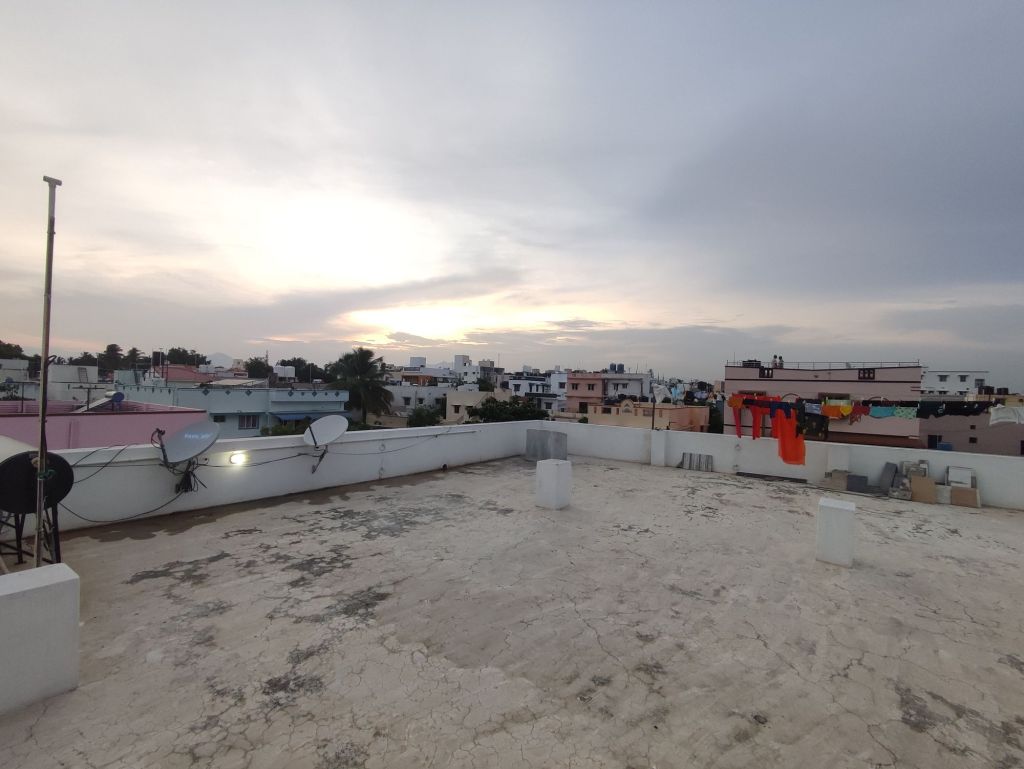
Before you start having the topic-specific and more general conversation with your examiner, you’ll be asked to present on a photo for 3-4 minutes. The last thing you want to do is to still be describing every little detail in the photo itself at the end of four minutes.
The photo should merely be used as a “springboard” from which you can talk a bit more about the issue at hand (keep it specific though – stick with air pollution if the photo shows lots of cars in traffic, not the litter in the high seas).
Describing the Photo (60 seconds, max)
Although we’re mainly using it as a launchpad, we still need to show to the examiner that we can effectively describe what’s in the photo. Keep it simple at first like the setting, what people are wearing and what country it may be. Starting impressions count so it’s nice to have a structure that demonstrates some snazzy Spanish like the subjunctive!
The key part is to move out this section onto the broader topic (e.g. air pollution in Latin America) relatively quickly after running out of surface level things to talk about.

Causes of the Issue
Now we can launch off into talking about the issue at hand. Logically, it makes sense to consider the possible causes of the issue. The best way to do this is probably to mention the variety of possible factors and maybe come to evaluate which is the most important in your eyes. You can also discuss who the fault lies with – is it the government’s fault for allowing it to happen? Our fault as consumers?

Consequences of the Issue and People Affected
Hopefully you know or have studied some communities in Spanish class that are plagued with a similar problem to the topic in your photo – this is where to bring them in (if you haven’t already).
Hammer through the possible consequences – how does it affect people’s health and livelihoods? How does it make them feel? Does it affect anything else (e.g. the environment)?
You can also make a comparison to your country/community if you would like and explain how it’s different (but do so briefly).

Future Actions, Solutions and Opinions
This is obviously the perfect place to use future and conditional tense (and perhaps subjunctives) if you haven’t already. “Espero que podamos…” is a golden one you can pretty much always throw in there.
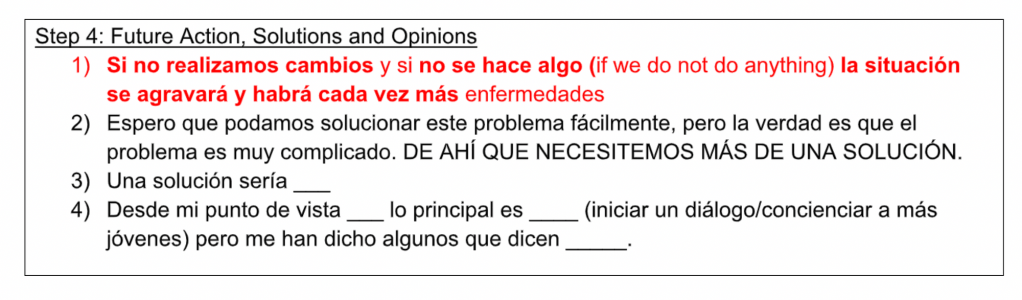
End off with an opinion that you can discuss with your teacher in the next section if necessary. When in doubt, mention education or legislation is probably the way forward.
Do some practice runs with some random photos and see if you can do it in 3-4 minutes. Buena Suerte 🙂

 Bavesh Blogs
Leave a comment